Mark Izydore is a Florida-based advisor and entrepreneur with a background in finance, healthcare consulting, and analytics. Currently serving as co-manager of CJ Consultants in Jupiter, Florida, Mark Izydore provides strategic analysis to clients seeking to expand their market presence while also supporting legal and medical professionals with complex litigation strategies. His career includes experience as an accountant at Arthur Andersen & Co. in Pittsburgh, where he earned recognition for his financial presentations. Educated in accounting at Duquesne University and music theory at Carnegie Mellon University, he blends analytical precision with creative interests. Outside of his professional work, he maintains a vinyl record review blog and enjoys tennis, a sport in which court surfaces play a critical role in influencing performance and strategy.
How Court Surfaces Shape Tennis Performance
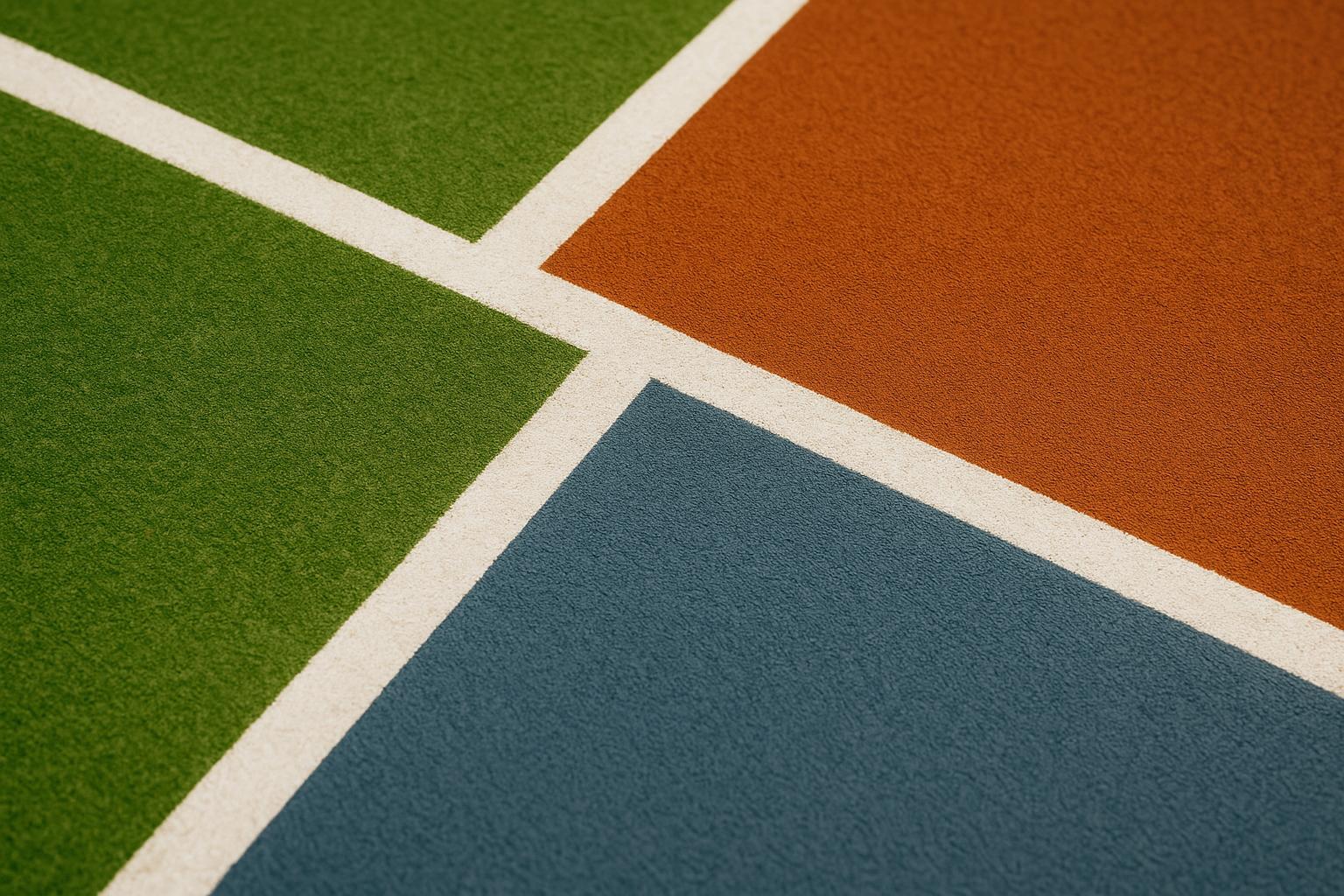
Tennis uses different kinds of surfaces known as courts, which play a crucial role in shaping performance, strategy, and even player success. The three main court types are grass, clay, and hard courts, and each offers distinct physical characteristics that influence the ball’s speed, its bounce, and the physical demands on athletes. Players must constantly adapt their style of play to suit the court surface, making the court type a very important factor in competitive tennis.
Grass is the oldest tennis court surface, and Wimbledon still famously showcases it. Grass courts serve as the fastest of the three main surfaces. Balls travel more quickly on grass than on other courts. On grass, the ball meets less friction and bounces lower and faster, which forces players to stay low and react quickly. Grass courts absorb more energy when the ball bounces, so players must rely on quick timing and sharp reflexes. Grass courts reward players with strong serves and quick volleys; legendary players such as Roger Federer have mastered this style of play on grass.
However, grass courts particularly react to weather conditions. Moisture from rainfall, dew, or humidity can lower the bounce and sometimes slow the ball down. These changes disrupt game speed and make it more difficult for players to maintain a stable footing.
Clay courts, by contrast, create a much slower surface than grass courts. Typically made from crushed shale, stone, or brick, these courts slow the ball by gripping it and producing a higher bounce while reducing its speed. These factors often lead to longer rallies, which give baseline players more time to react and construct points, but also make the play more physically demanding. The loose structure of clay courts makes players slide to stop, and although this helps prevent injury, it requires more energy and effort to regain balance than on any other courts. Because the pace is slower and bounce is higher, players who use heavy topspin enjoy an advantage, while big serves and fast net plays prove less effective. Clay courts reward patient and strategic play; the iconic Rafael Nadal has earned the title “King of Clay” for his exceptional performances on this surface throughout his career.
In contrast to grass and clay, hard courts offer a more balanced playing surface for speed and bounce. Builders often use rigid materials such as asphalt or concrete, topped with acrylic, to create hard courts. This construction produces a medium to moderately fast bounce suitable for various playing styles. Because hard courts provide predictable bounces, players can anticipate shot behavior more easily, making the surface suitable for both aggressive and defensive play. However, hard courts increase the risk of lower-limb injuries compared to other court types, likely because they absorb less shock.
In conclusion, grass, clay, and hard courts each create unique playing conditions that shape how the game unfolds. Grass offers speed and low bounce, clay produces slow, high-bouncing rallies, and hard courts provide balanced speed and bounce. Each surface delivers distinct advantages and disadvantages, rewarding different skills and strategies. Understanding these differences highlights the importance of court surfaces in tennis and the need for players to adapt to excel on all of them.
About Mark Izydore
Mark Izydore is a co-manager of CJ Consultants, a Florida-based financial and healthcare advisory firm. With a background in accounting from Duquesne University and experience at Arthur Andersen & Co., he has developed expertise in analytics, consulting, and strategic problem solving. He also holds a degree in music theory from Carnegie Mellon University and maintains a vinyl record review blog. His interests include tennis, wine, and cultural pursuits.