Jeff Geschwind, MD, is a physician scientist and interventional oncologist whose career has focused extensively on liver cancer and other gastrointestinal malignancies. Currently serving as Medical Director of Oncology, Image-Guided Therapy, and Imaging Core Lab at NAMSA, he oversees imaging protocols used as clinical trial endpoints while also advising organizations involved in cancer research and treatment innovation. Dr. Geschwind has held leadership and academic positions at institutions including Johns Hopkins University School of Medicine and Yale University School of Medicine. Widely recognized for his contributions to interventional oncology, he has led or co-led numerous clinical trials, authored nearly 300 scientific publications, co-edited two books, and helped advance imaging technologies used in the treatment of liver tumors. Given his longstanding involvement in liver cancer research, treatment, and clinical innovation, Dr. Geschwind offers valuable insight into understanding this complex disease and its management.
Understanding Liver Cancer and the Importance of Early Detection
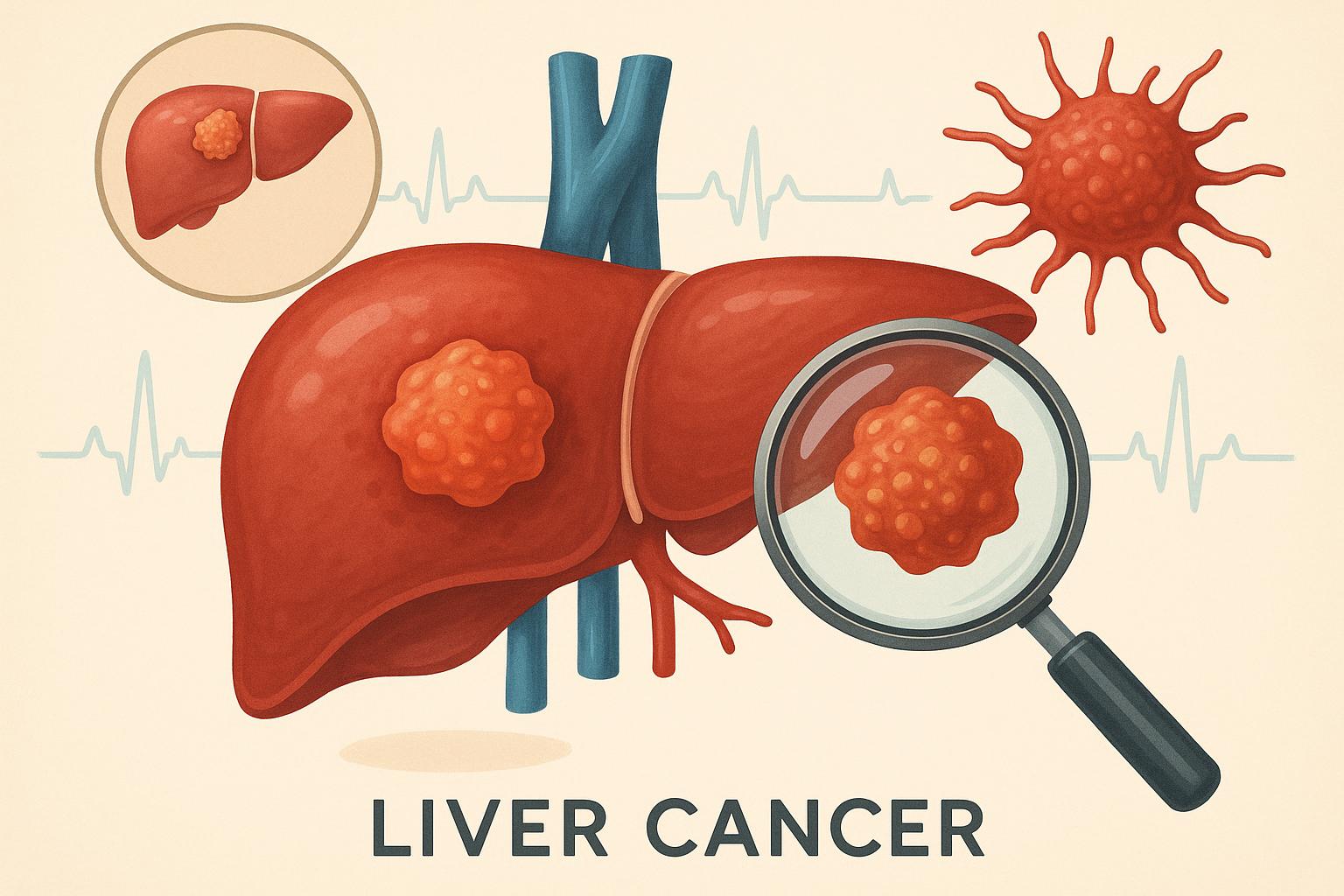
Unlike metastatic liver cancer which spreads to the liver from other sources, primary liver cancer originates in the liver itself. It is one of the most serious global health problems worldwide as it ranks as one of the most highly lethal cancers -second or third according to the World Health Organization.
Although three distinct forms of primary liver cancer exist, the most common by far is hepatocellular carcinoma, accounting for almost 90% of cases. Intrahepatic cholangiocarcinoma, which develops in the bile ducts, accounts for most of the remaining cases, whereas angiosarcoma occurs extremely rarely.
The incidence of primary liver cancer has continued to rise throughout the world over the last decades mostly due to the concomittant rise in chronic viral hepatitis (B and C) especially in East Asia and sub-Saharan Africa. However, its incidence has also increased in North America and Europe mostly driven by the increasing rates of metabolic dysfunction-associated steatotic liver disease (MALD), obesity, diabetes, and alcohol-related liver disease. According to the American Cancer Society, the number of new cases diagnosed annually in the US has reached 42,340.
A unique characteristic of primary liver cancer is that it is really two diseases in one where the cancer typically forms in the context of a chronically injured, inflammed or diseased liver known as cirrhosis. Conditions that increase the risk of developing liver cirrhosis include chronic viral infections due to hepatitis B or C, alcohol-related liver disease, MASLD and metabolic dysfunction-associated steatohepatitis and aflatoxin exposure. This process of initial injury to the liver to developing liver cancer can take years as it requires the initial injury to cause chronic inflammation to liver tissue. Once inflammed or fibrotic, molecular abnormalities within liver tissue are activated triggering a shift to malignancy,
Many of the risk factors for liver cancer are controllable, meaning that they can be mitigated through lifestyle and behavioral changes. Regularly consuming alcoholic beverages and living at an unhealthy weight dramatically increase the risk of developing liver cancer.
Clinically, primary liver cancer can be extremely difficult to diagnose because none of the symptoms are specific to liver cancer. Patients may experience dark-colored urine, pale or grey bowel movements, mild right upper quadrant pain, fatigue, chronic fever, weight loss and mysterious bruising throughout the body. Other symptoms include itchy skin, nausea and vomiting. As the disease progresses, symptoms become more evident in the form of severe abdominal pain, jaundice and abdominal swelling.
Because of its insidious nature, liver cancer is often diagnosed at an advanced stage which explains the high lethality of liver cancer. Patients are diagnosed through a combination of imaging, laboratory testing and if required a tissue biopsy. Tumor markers -alpha-feto protein (AFP)- when elevated can help confirm the diagnosis alleviating the need for tissue analysis. Thanks to developments in imaging technologies and interpretation, most liver cancers can now be diagnosed through standard imaging with multiphasic contrast-enhanced CT or MR imaging, where early hyperenhancement within a tumor followed by washout on a delayed phase is virtually pathognomonic of liver cancer. Patients known to be at high risk for liver cancer i.e. those with chronic cirrhosis should undergo surveillance testing through a combination of blood work analysis for AFP and liver ultrasound to detect a mass as early as possible. Ealry detection offers the best chance for a cure.
Once liver cancer has been diagnosed, treatment options are generally based on the stage of the disease. If liver cancer is at an early stage, curative treatments can be provided such as transplantation, surgical resection or percutaneous ablation. For patients with more advanced disease, which unfortunately is the majority, several therapies such as transarterial chemoembolization and selective internal radiation therapy have proven to be quite effective at prolonging patient survival while maintaining an excellent quality of life. These minimally invasive procedures attack cancer cells using high-dose chemotherapy and radiation without causing significant damage to healthy liver tissue. Finally, systemic targeted drug therapy and immunotherapy have radically changed the treatment landscape for patients with liver cancer by significantly improving patient outcomes through randomized clinical trials. These recently completed trials have provided a ray of hope for patients suffering from this highly lethal cancer.
About Jeff Geschwind
Jeff Geschwind, MD, is an interventional oncologist and physician scientist whose work focuses on liver cancer and other gastrointestinal malignancies. He serves as Medical Director of Oncology, Image-Guided Therapy, and Imaging Core Lab at NAMSA and advises several organizations involved in oncology research and innovation. Formerly a professor at Johns Hopkins University and chairman of radiology at Yale University School of Medicine, Dr. Geschwind has authored nearly 300 scientific publications, led numerous clinical trials, and received multiple honors recognizing his contributions to interventional oncology.