


Van Hipp is a government affairs leader and military veteran based in Alexandria, Virginia, and the chairman of American Defense International, Inc., a firm he founded in 1995. Van Hipp has extensive experience working with policymakers and advising global businesses on strategy and program development. His background includes service as Deputy Assistant Secretary of the United States Army, where he played a leading role in mobilizing Army Reserve Forces during Operation Desert Storm, as well as service as Principal Deputy General Counsel of the US Navy. In addition to his government and private sector work, he has remained active in advisory and philanthropic roles. His experience in military strategy and government operations aligns with the enduring relevance of key strategies demonstrated during historic operations such as DDay.
Key Military Strategies from DDay
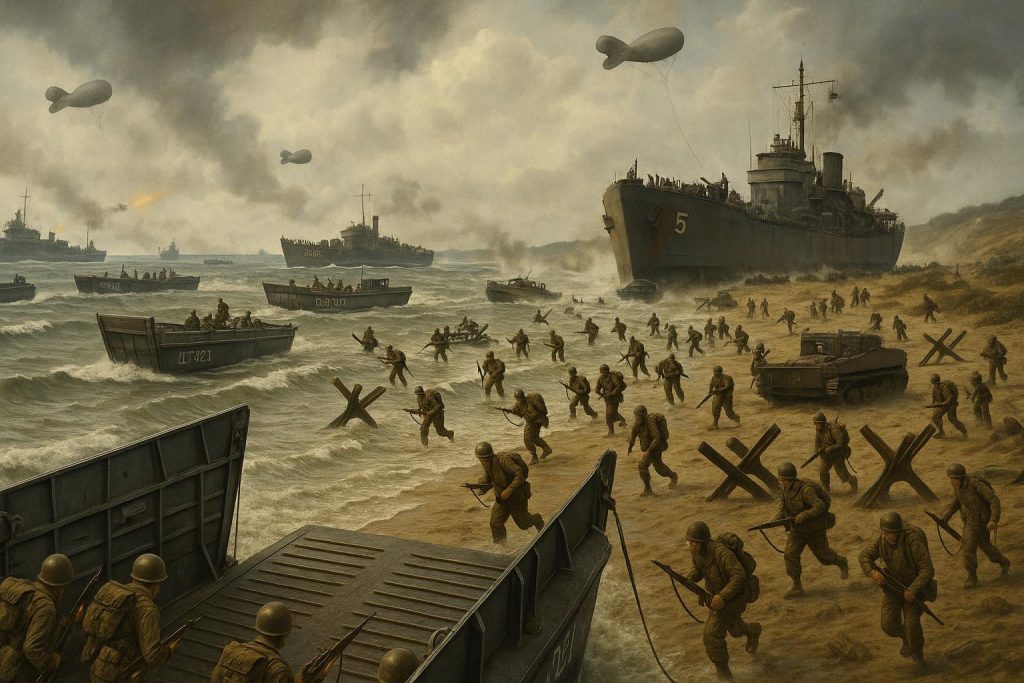
Many regard the D-Day landing of June 6, 1944, as one of the most complex and strategically demanding military operations in history. Code-named Operation Overlord, it resulted in Western Europe’s victory against Nazi control in World War II. The success of this operation did not rely on a single tactic. Instead, it became a carefully coordinated set of military strategies that involved logistics, coordination, adaptability, and deception. The strategies adopted during D-Day are still quite relevant in modern military doctrine.
Strategic deception played a key role in the success of the D-Day operation. Allied planners understood that advancing toward heavily fortified positions would be quite costly. So, they decided to deceive the Axis forces about the invasion site. The Axis forces created Operation Fortitude to convince German command that the invasion would take place at Pas-de-Calais rather than in Normandy. To achieve this, the Allied Forces adopted fake armies, false radio transmissions, double agents, and inflatable tanks and dummy landing craft. This deception made the Germans concentrate their defenses away from Normandy, reducing resistance when the actuaL landing happened.
D-Day’s invasion strategy required simultaneous landings on five beaches: Gold, Juno, Sword, and Utah. This multidimensional assault shocked and overwhelmed German defenses, constraining their ability to mount counterattacks. Each beach had its own unique objective. They needed to secure a foothold for incoming troops, work with airborne divisions, and then establish supply lines. Omaha Beach was the front for the most intense fighting. Here, strong German defences inflicted heavy casualties on the Allied forces. However, Allied forces reorganized units and drove further inland.
Airborne operations played a key role in the success of D-Day. In the early hours of the invasion, thousands of paratroopers landed behind enemy lines to disrupt German defenses and secure key infrastructure, including bridges, roads, and communication networks. Their mission focused on slowing enemy reinforcements, creating confusion, and preparing the ground for the main assault. Although many units landed off-target, they adapted quickly and achieved their objectives. Their actions showed how initiative and flexibility at the unit level can shape the outcome of a large operation.
The Allies also relied heavily on naval and air superiority to support the invasion. Before troops reached the beaches, naval forces bombarded coastal defenses while air forces targeted German supply lines and communication systems. This coordinated effort weakened enemy positions and protected incoming troops and equipment. Strong control of the air limited the enemy’s ability to respond effectively and ensured that Allied forces could land and advance with reduced resistance.
Logistics played an equally important role in sustaining the invasion. The Allies developed innovative solutions to support the massive flow of troops and supplies. They built portable harbors to unload equipment, created underwater fuel pipelines, and established large-scale supply chains to maintain operations. These systems allowed forces to continue advancing after the initial landings. Without reliable logistics, the invasion could not have maintained its momentum.
Accurate intelligence and strong coordination among Allied nations also contributed to success. Planners used reconnaissance, resistance networks, and intercepted communications to understand enemy positions and movements. At the same time, commanders encouraged flexibility, allowing units to adjust their strategies in response to changing conditions. Forces from multiple countries worked together under a unified command, shared information, and pursued common objectives. The level of cooperation demonstrated the strength of coordinated military efforts and helped ensure the operation’s success.
About Van Hipp
Van Hipp is the chairman and founder of American Defense International, Inc., a Washington, DC based government relations and business development firm. A veteran of the United States Army, he previously served as Deputy Assistant Secretary of the Army and played a key role in mobilizing Reserve Forces during Operation Desert Storm. He has also held senior roles within the US Navy and remains active in advisory and philanthropic organizations, including the Salvation Army.

