


Dr. Melvin Rabin spent nearly five decades practicing clinical psychology at his private clinic in Needham, Massachusetts, where he used Gestalt therapy, eye movement desensitization and reprocessing, hypnotherapy, and both individual and couples counseling to help patients work through psychosocial challenges, including family conflict and divorce. He also provided senior executive coaching and lectured at institutions such as Harvard University, Boston College, and Suffolk University. Dr. Rabin earned his doctorate in psychology from Boston University, later served as a clinical instructor in psychology at Harvard, and holds certifications from the Gestalt Institute of Cleveland and the EMDR International Association, along with a longstanding interest in neuroscience and cognitive assessment. That interest connects directly to a distinction many families and clinicians encounter, one that Dr. Melvin Rabin understands well: how a brief cognitive screening differs from a full neuropsychological evaluation.
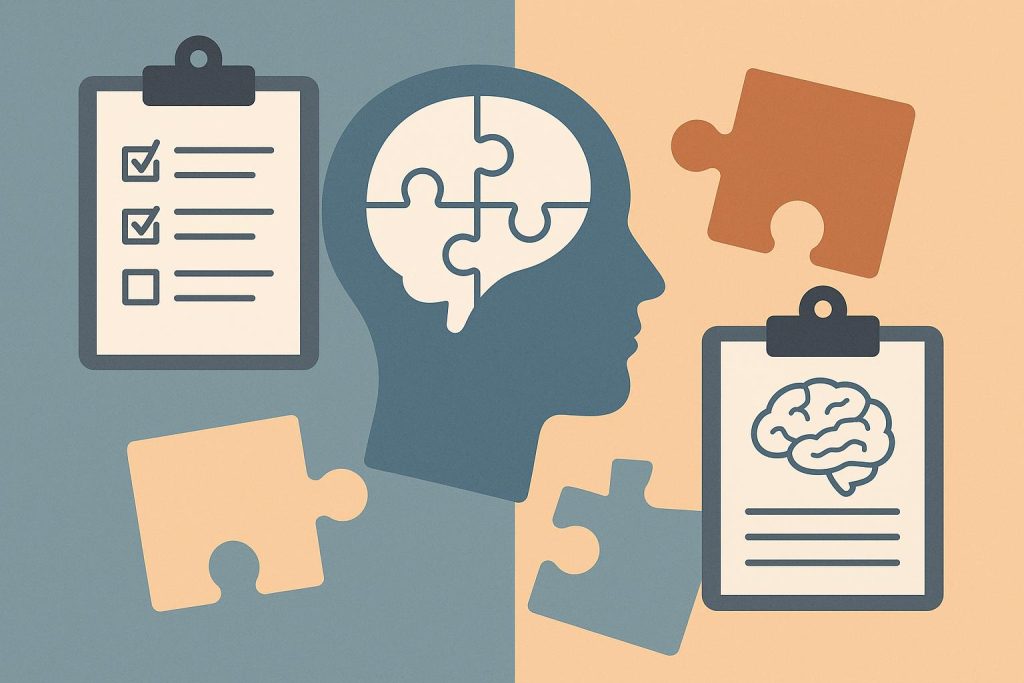
Cognitive screening and neuropsychological testing both examine thinking abilities, but they serve different purposes. A cognitive screening is a brief check for possible difficulty in areas such as memory, attention, or thinking. Neuropsychological testing is a more extensive evaluation that examines patterns of cognitive strengths and weaknesses in greater depth.
Clinicians use cognitive screening as an initial look at selected abilities. Depending on the tool, a screen may include tasks involving memory, orientation, language, attention, or simple problem-solving. The result can show whether a person may need closer assessment, but the screen is designed to be limited rather than comprehensive.
A neuropsychological evaluation examines cognition in greater detail using a battery of standardized measures selected for the clinical question. Areas assessed may include learning and memory, attention, language, processing speed, visuospatial abilities, and executive functions.
Executive functions include higher-level skills such as planning, organizing, problem-solving, and adapting behavior when circumstances change. Test scores are typically interpreted using appropriate normative data to place an individual’s performance in context. The difference is therefore not simply that neuropsychological testing takes longer.
Screening mainly asks whether there are signs that deserve further attention, while a comprehensive evaluation looks more closely at how a person performs across different areas. That broader pattern can show where abilities are relatively stronger or weaker and can help answer a more specific clinical question.
Test scores are also only part of a neuropsychological evaluation. The clinician may consider education, medical and psychiatric history, medications, mood, everyday functioning, neurological events, and the reason the person was referred. Interviews, records, and behavioral observations can add information that test scores alone do not provide.
This context helps the clinician interpret performance rather than treating one score as a complete explanation. A concerning screening result does not by itself identify the cause of a cognitive difficulty.
Brief cognitive tests can indicate that further evaluation may be useful, but they cannot independently diagnose dementia or another cause of impairment. A normal screening result also does not rule out every possible cognitive difficulty.
More detailed testing may be considered when cognitive concerns persist, or an initial assessment does not answer the clinical question. Referral questions may involve persistent memory changes, difficulties following stroke or brain injury, possible dementia or another neurological condition, or cognitive problems that interfere with work and everyday functioning.
These concerns justify investigation but do not establish a diagnosis by themselves. Neuropsychological testing can provide a more detailed picture, but it does not automatically identify one exact cause for every difficulty.
Similar patterns of poor performance can occur in different clinical circumstances. Clinicians therefore interpret test findings alongside medical information, history, mood, medications, and other relevant evidence when considering possible explanations.
A cognitive screening result does not automatically lead to a full neuropsychological evaluation. Depending on the broader clinical assessment and the question being investigated, other information may already be sufficient or a different type of follow-up may be appropriate.
Neuropsychological testing is particularly useful when the available information remains unclear or a more detailed cognitive profile is needed. When looking at a cognitive test result, the useful next step is to identify what kind of assessment produced it and what that assessment was designed to answer.
A score from a brief screening tool should not be treated as though it carries the same information as findings from a comprehensive neuropsychological evaluation. Knowing the purpose and scope of the assessment helps place the result in the proper clinical context.
About Dr. Melvin Rabin
Dr. Melvin Rabin is a retired clinical psychologist who practiced in Needham, Massachusetts, for nearly five decades, delivering individual, group, couples, and family therapy alongside senior executive coaching. He trained extensively in Gestalt therapy, EMDR, hypnotherapy, and divorce mediation, and lectured at Harvard, Boston College, Boston University, and Suffolk University. He earned his doctorate in psychology from Boston University and holds certifications from the Gestalt Institute of Cleveland, the EMDR International Association, and the American Society of Clinical Hypnotherapists. He resides in Needham, Massachusetts.

